Choosing a LASIK surgeon in Plano, TX, or deciding whether to travel elsewhere in Texas for LASIK, comes down to three things: the surgeon’s experience with multiple vision correction procedures, the technology they use, and whether they’ll be honest with you when LASIK isn’t the right answer. At Visionary Eye Surgery, I believe the best surgeon for your eyes is the one who tells you the truth, not the one who tells you what you want to hear.
Why Does It Matter Who Does Your LASIK?
I understand why people start comparing LASIK like a commodity. The ads can make every clinic sound the same: quick procedure, clear vision, low monthly payment. But that is not the full decision.
That’s not how it works. LASIK is surgery. On your eyes. The two things you use to navigate the entire world. The difference between a good outcome and a great outcome often comes down to the surgeon’s judgment calls during your evaluation and in the operating room.
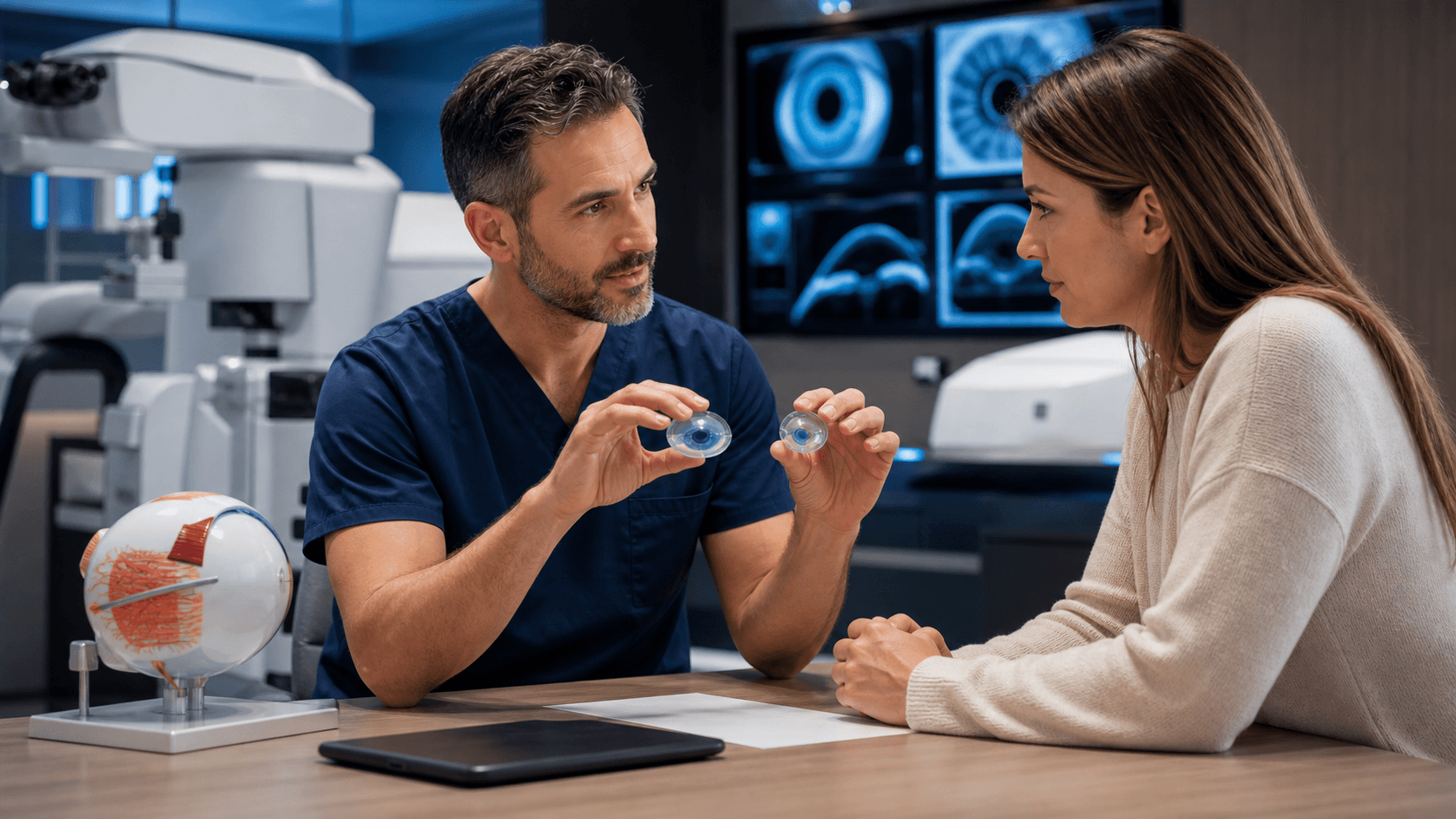
Two patients with the same prescription can need completely different treatment plans. One might be a strong fit for All-Laser LASIK. The other might be better served by SMILE or EVO ICL. A practice with several vision-correction options can compare those procedures from the same diagnostic findings instead of forcing every patient into one treatment.
What Should I Look for in a Surgeon in Dallas-Fort Worth?
First, check their credentials. You want a board-certified ophthalmologist, not an optometrist. Optometrists are great at what they do. They examine eyes, prescribe glasses and contacts, and manage many eye conditions. But they don’t perform surgery. Your LASIK surgeon should be someone who went to medical school, completed an ophthalmology residency, and pursued advanced subspecialty training in refractive or corneal surgery.
Second, look at the range of procedures they offer. A limited procedure menu can narrow the recommendations a practice is able to make. At Visionary Eye Surgery in Plano, I perform LASIK, SMILE, EVO ICL, ASA/PRK, Custom Lens Replacement, and cataract surgery, with dry eye treatment available when the surface needs to be stabilized first. The purpose of that range is to let the diagnostic findings drive the recommendation.
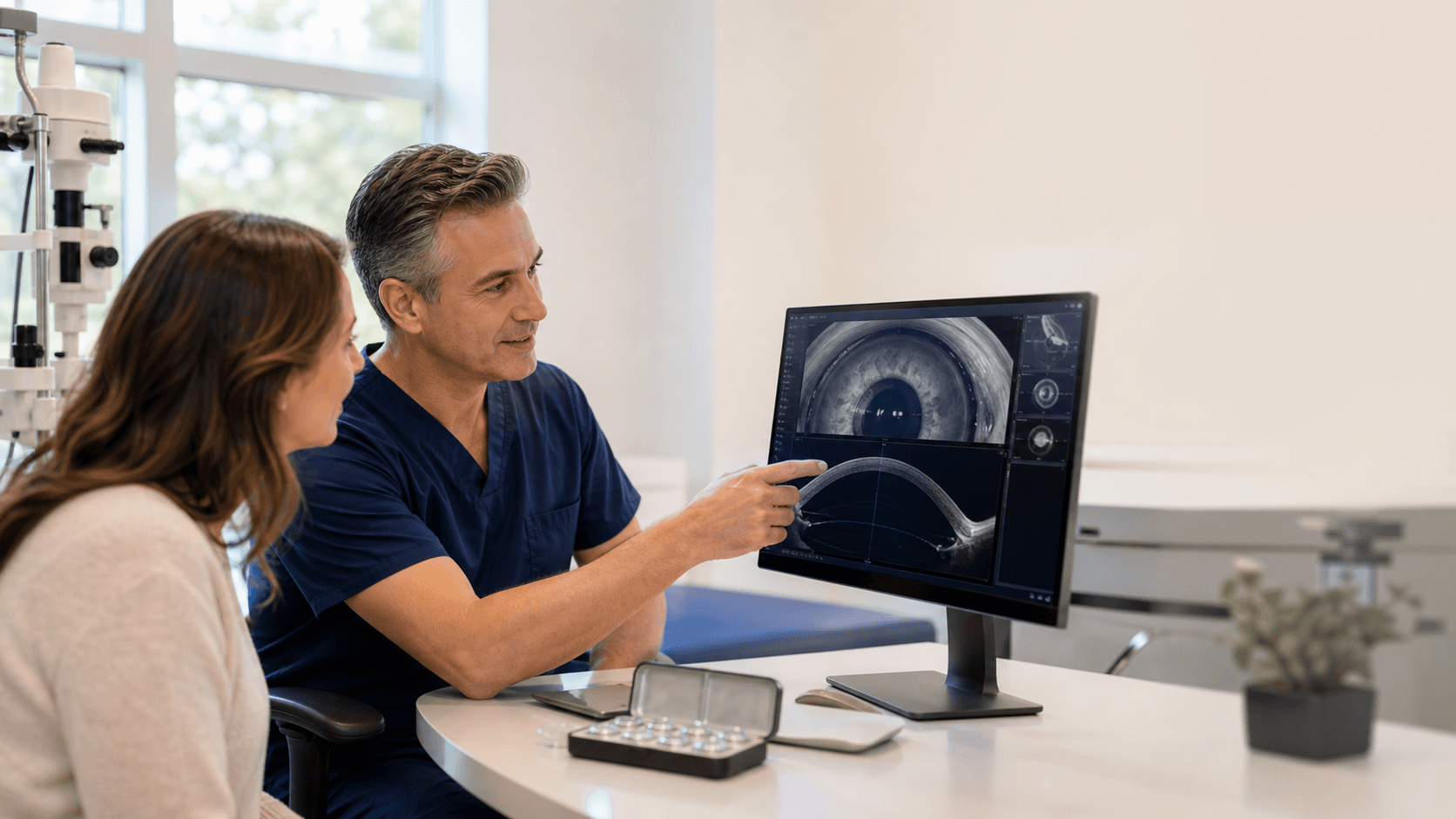
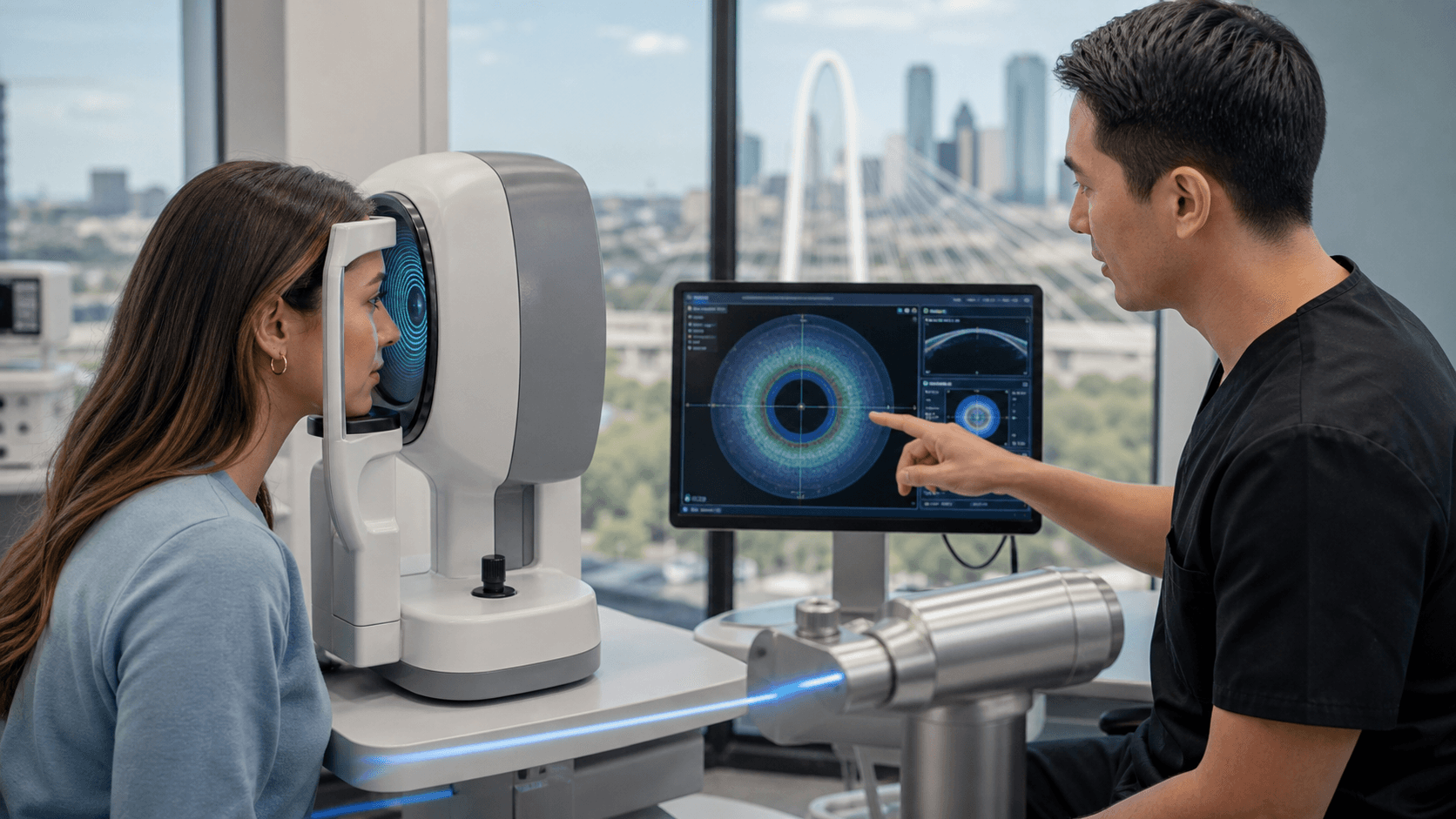
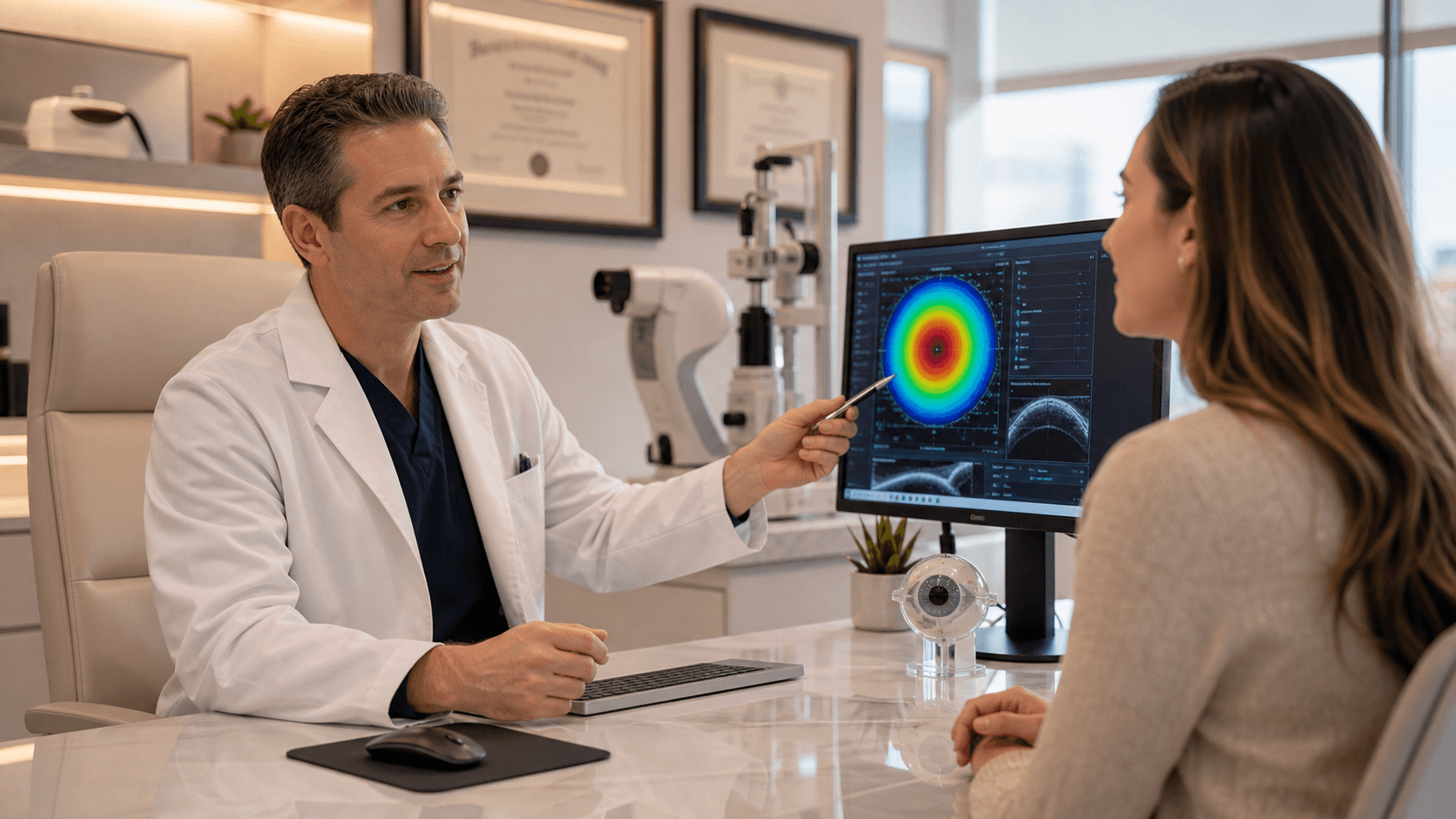
Third, ask about technology. In 2026, strong modern planning often includes topography-guided LASIK platforms like Contoura Vision, femtosecond lasers for bladeless flap creation, excimer laser planning, tear-film testing, and advanced diagnostic equipment such as corneal tomography and wavefront aberrometry. Strong Dallas-Fort Worth LASIK pages often emphasize modern lasers, fast recovery, financing, and a quick consultation. Those matter, but they are not enough if the exam does not also compare SMILE, ASA/PRK, EVO ICL, dry-eye treatment, and lens-based options when LASIK is not the safest fit. If a clinic in North Texas cannot explain its diagnostic process clearly, including how it handles LASIK dry eye evaluation, keep asking questions. The surgeon's procedure range and diagnostic judgment matter as much as the laser brand.
Which Credentials Actually Matter?
For LASIK in Plano, you want an ophthalmologist: an MD or DO who completed medical school, ophthalmology residency, and surgical training. Optometrists are important for primary eye care, glasses, contacts, and many medical eye conditions, but they do not perform LASIK surgery in Texas.
Board certification should be table stakes. In ophthalmology, American Board of Ophthalmology certification means the surgeon completed an approved residency, passed written and oral board exams, and committed to ongoing education. Refractive-surgery-specific credentials, such as World College of Refractive Surgery & Visual Sciences certification, add another signal that the surgeon lives in this category rather than dabbling in it.
Volume matters too. LASIK is a precision procedure, and precision procedures reward repetition. Ask how many LASIK procedures the surgeon personally performs in a year, not how many the clinic has done across all locations. A surgeon who answers with real numbers is usually a surgeon who tracks real outcomes.
And ask about quality tracking. A serious LASIK practice should be able to explain how it monitors candidacy decisions, follow-up care, complications, enhancements, and patient feedback. You do not need a marketing number. You need to know the surgeon measures the work carefully enough to improve it.
What Questions Should I Ask During My Consultation?
Here are the questions I wish every patient would ask me. Not because the answers make me look good, but because they force any surgeon to show their cards.
Ask them how many procedures they’ve personally performed. Not the clinic. The surgeon. Experience matters in surgery. It just does.
Ask what happens if you’re not a good candidate for LASIK. If they get uncomfortable or brush the question off, that tells you something. At Visionary Eye Surgery, I tell patients “no” regularly. Not because I enjoy it, but because operating on someone who shouldn’t have LASIK is the one thing I refuse to do.
Ask about their complication rate and how they handle outcomes that fall short. Every honest surgeon has dealt with less-than-perfect results. The question isn’t whether it happens. It’s what they do about it. Our 20/Happy Patient Guarantee exists because I believe you should be both seeing well and feeling good about the experience.
Ask who manages your post-operative care. Some high-volume LASIK centers have the surgeon do the procedure and then hand you off to someone else for follow-up. I see my own patients after surgery. Your eyes, my responsibility.
What the first page of results usually emphasizes
When patients compare LASIK surgeons online, the same themes show up again and again: free consultations, financing, modern lasers, fast recovery, large review counts, and multiple locations. Those details matter, but they do not prove that a specific procedure fits your eye.
Use those claims as a starting screen, then ask the questions that separate a strong LASIK surgeon from a strong LASIK advertisement:
- Does the surgeon personally review the corneal maps, tomography, dry-eye findings, wavefront data, prescription stability, and candidacy limits?
- Can the practice compare LASIK, SMILE, PRK/ASA, EVO ICL, RLE, and dry-eye treatment in the same consultation?
- Will the surgeon explain why you are not a LASIK candidate if thin corneas, high prescription, keratoconus risk, or dry eye makes LASIK less responsible?
- Does the written estimate include the laser plan, follow-up care, enhancement terms, financing, FSA/HSA use, and what happens if another procedure is safer?
- Who sees you after surgery if dryness, glare, halos, delayed healing, or an enhancement question comes up?
That is the difference between shopping for a LASIK center and choosing the person responsible for your eyes.
Should Cost Be a Factor?
Of course it should. But it shouldn’t be the only factor, or even the primary one.
Very low advertised prices may apply only to a limited prescription range or exclude parts of the evaluation, treatment plan, follow-up care, or enhancement policy. In the Dallas-Fort Worth market, LASIK commonly ranges from $1,500 to $3,500 per eye. Last reviewed: July 2026. Ask for a written total based on your measurements and a list of what is included.
Transparent pricing matters. You should know exactly what you’re paying for before you commit. At my practice in Plano, the price includes your consultation, the procedure, and all follow-up visits. No hidden fees. No surprise bills.
Many practices in DFW offer financing options. If the upfront cost is a barrier, ask about current payment plans and eligibility. Compare the complete surgical quote with your own expected cost of contacts, glasses, and exams rather than assuming the same break-even timeline applies to everyone.
Related resources
- Areas We Serve
- Plano ophthalmology care
- Dr. Shehzad Batliwala's profile
- LASIK, EVO ICL, PRK, SMILE, and RLE comparison
- Contact and consultation guide
- LASIK evaluation and options in Plano
What About Online Reviews?
Read them. They’re useful. But read them critically. A practice with 500 five-star reviews and zero negative ones should make you curious, not confident. Every surgeon has patients who weren’t thrilled. The question is how they responded.
Look at patient testimonials that include specific details. “Dr. Shehz explained everything clearly and didn’t rush me” tells you more than “Great experience, would recommend.” Look for patterns. Are multiple people mentioning the same positive or negative thing?
Trust Your Gut
After all the research, the consultations, and the comparison shopping, trust how you felt sitting in that chair. Did the surgeon listen to you? Did they explain things in plain language? Did they seem more interested in your measurements or in rushing you toward a decision?
The right surgeon for your LASIK in Plano, or for a Texas LASIK trip into Plano, is the one who makes you feel like a patient, not a number. Come see me at Visionary Eye Surgery, or review our out-of-town patient planning, and find out what that feels like.
Keep Reading
Medically Reviewed by Dr. Shehz, DO
Dr. Shehzad Batliwala, DO—better known as Dr. Shehz—is a board-certified ophthalmologist and eye surgeon who brings both technical precision and genuine compassion to every patient he treats.
Explore this content with AI
Open this article in your preferred AI assistant for a plain-English summary, action steps, and questions to ask before booking a consultation.
Want a direct answer about your eyes? A complimentary consultation gives you a clear, written recommendation.