LASIK can reduce dependence on glasses or contacts, and many patients are satisfied with their results. It is not risk-free. Dry eye, glare, halos, a remaining prescription, and serious complications all belong in an informed discussion before surgery. The relevant question is how the benefits and risks apply to your eyes and daily life.
This guide combines the safety and complications discussion in one place. For the procedure itself, start with the LASIK service page. A consultation should help you consider alternatives, including continuing with glasses or contacts.
What do satisfaction statistics tell you?
Satisfaction, visual acuity, new symptoms, and serious complications are different outcomes. They should not be compressed into a single "success rate."
In the FDA's PROWL studies, more than 95 percent of participants were satisfied with their vision after LASIK. Among participants without visual symptoms before surgery, up to 46 percent reported at least one new visual symptom at three months. Fewer than 1 percent reported a lot of difficulty with or inability to perform usual activities because of any one symptom.
These findings can coexist: a person may be pleased overall and still notice a symptom. They are study results, not Visionary Eye's own audited outcomes or a prediction for an individual patient. Ask which definition, follow-up period, and patient population sit behind any percentage you are shown.
Which side effects should you discuss?
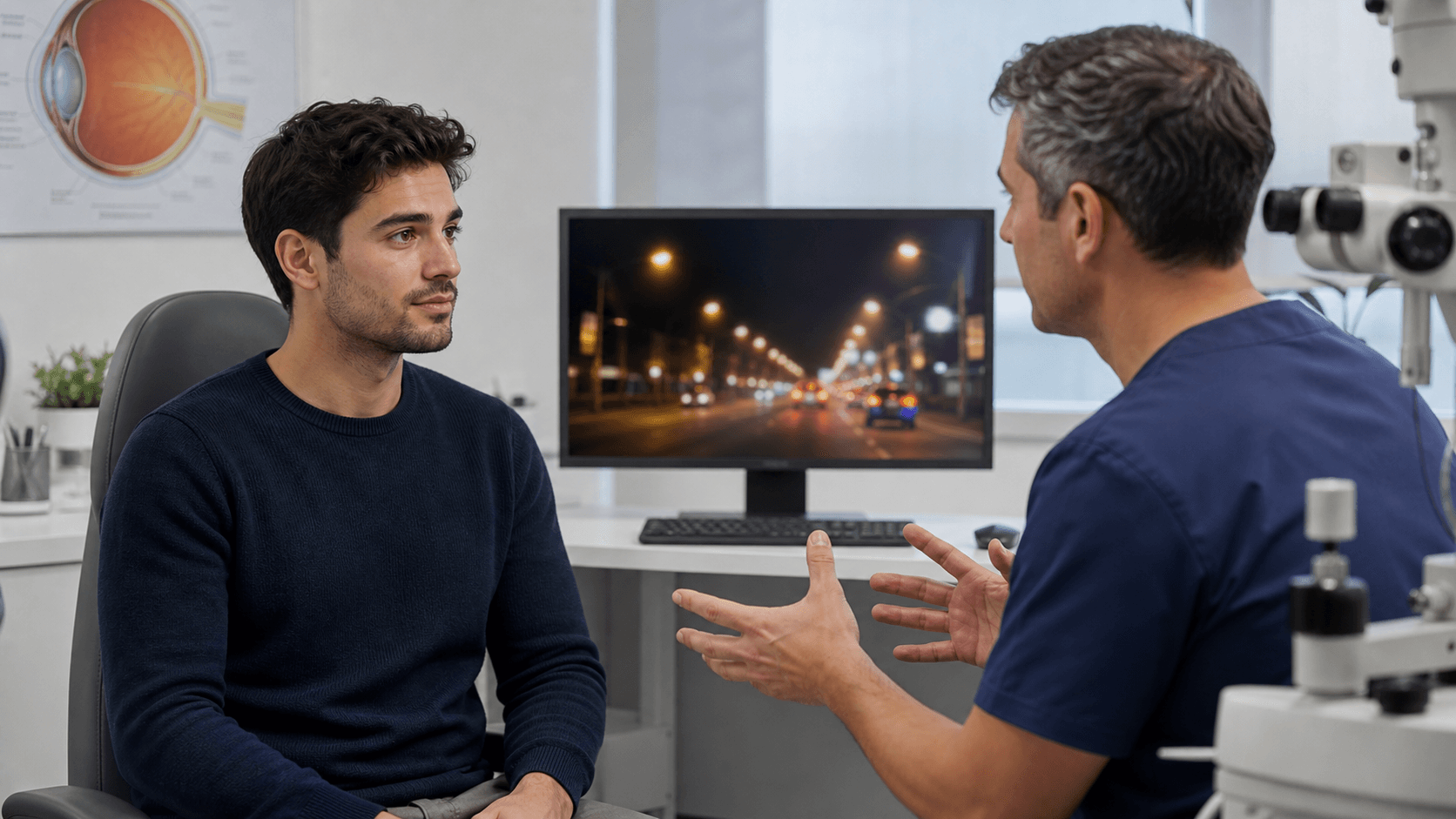
Dryness can cause discomfort and fluctuating clarity. Glare, halos, starbursts, or double images may affect nighttime tasks even when an eye-chart result looks good. Some symptoms improve as the eye heals; others can persist or need ongoing treatment.
Tell the surgeon about symptoms you already have, the drops or contacts you use, and what matters to your work. A patient who drives after dark needs a different conversation from one who mainly reads in good lighting. Neither should be promised that every symptom will disappear by a particular week.
A remaining prescription may mean glasses, contacts, or discussion of additional treatment. An enhancement is another medical decision, not a guaranteed finishing step. Ask what would make further treatment unsuitable.
Can LASIK cause permanent vision loss?
Yes. Serious complications can cause permanent loss of vision, including, in severe cases, blindness. FDA guidance specifically describes that possibility. It is inaccurate to promise that LASIK cannot cause blindness or to present all risks as temporary inconveniences.
Infection, inflammation, flap problems, and corneal weakening require appropriate recognition and treatment. Even careful screening and an experienced surgeon cannot make the risk zero. Ask how urgent problems are handled and how you can reach the team after hours.
How does screening reduce risk?
Evaluation considers prescription stability, corneal thickness and shape, the tear film, pupils, medication history, and other eye-health findings. A screening result is not simply a yes or no based on the strength of your glasses. Two patients with similar prescriptions may receive different recommendations.
Corneal ectasia is progressive weakening and distortion of the cornea that can impair vision. Screening for abnormal shape and other risk factors is important, but it should not be portrayed as completely preventable or always the result of an obvious screening mistake.
PRK avoids a LASIK flap but still removes corneal tissue. It is not a tissue-adding operation and does not suit every thin or abnormal cornea. EVO ICL has different anatomical requirements and intraocular risks. Read the thin-cornea guide for the questions that help separate these options.
What should you ask at the consultation?
Ask the surgeon to explain the findings that support the recommendation, the reasons to wait, and the alternatives that were considered. Request the patient information for the proposed laser and discuss outcomes for patients with similar prescriptions and eye-health findings.
Describe what would count as a worthwhile result for you and what tradeoff would be difficult. Needing readers later, needing distance glasses for some tasks, or managing dry eye may affect that decision. Take time to read the consent information rather than relying only on a headline percentage.
For appointment preparation, use the LASIK consultation guide. It covers the visit separately so this page can stay focused on safety and risk.
How should DFW patients plan follow-up?
If you travel from Dallas, Frisco, McKinney, or farther across North Texas, confirm where the early postoperative checks will happen and who will assess an urgent concern. Visionary Eye is in Plano; arrange a driver and a realistic follow-up schedule rather than assuming that feeling comfortable means you are cleared to drive.
Severe pain, sudden or worsening vision loss, or other symptoms the team identifies as urgent require prompt assessment. Do not wait for a routine appointment or drive yourself with impaired vision. The LASIK recovery guide explains broader recovery planning without replacing your surgical instructions.
Sources
FDA: LASIK risks and choosing a doctor
FDA: Patient-Reported Outcomes with LASIK studies
FDA: conditions and risk factors affecting LASIK candidacy
FDA: LASIK and corneal tissue removal
This educational guide does not estimate your individual risk. Review personal suitability and treatment instructions with your ophthalmologist.
Your exam can clarify which options fit your eyes. Visit our Plano team from anywhere in DFW.
Book a free visit