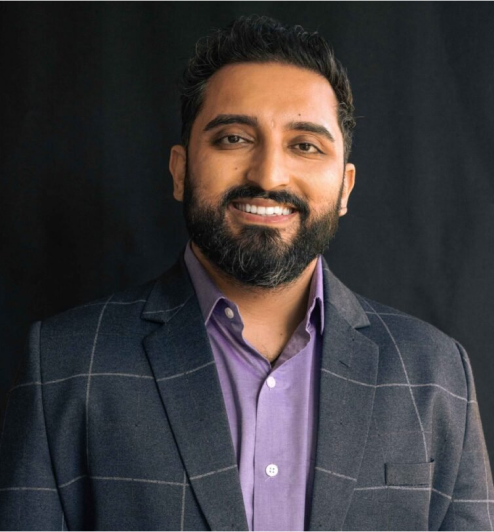

SMILE eye surgery in Plano is a good fit for most patients between twenty-two and forty-five with moderate to high nearsightedness, healthy corneas, and active lifestyles where flap-free vision correction matters. In Dallas-Fort Worth, the most common SMILE patients I see are athletes, first responders, military, and parents who don’t want to worry about a corneal flap years down the road. Candidacy isn’t about wanting SMILE. It’s about whether your eyes are built for it.
What is SMILE and how is it different from LASIK?
SMILE stands for small incision lenticule extraction. Instead of creating a flap in the cornea like All-Laser LASIK, the femtosecond laser creates a small lens-shaped piece of tissue inside the cornea, and I remove it through a tiny side incision smaller than four millimeters.
That’s the entire procedure. No flap. No long surface incision. The biomechanical strength of the cornea stays much closer to its original state.
In practical terms, this matters for anyone whose eyes might take impact during sports, training, or work. It also matters for patients who run dry, because cutting fewer corneal nerves means less interference with the tear film.
Who is the best candidate for SMILE in DFW?
The textbook SMILE candidate in Plano is between twenty-two and forty-five years old, has a stable prescription for at least a year, is myopic anywhere from negative one to around negative ten with up to three diopters of astigmatism, has healthy corneas with adequate thickness, and doesn’t have significant dry eye that hasn’t been treated.
Beyond the prescription, I look at lifestyle. SMILE shines for patients in jobs and hobbies where flap risk would change how they live. Think Plano firefighters and police officers, professional and weekend athletes in DFW, military service members, and parents of small kids who get smacked in the face by toddlers on a daily basis.
Who shouldn’t get SMILE?
If your prescription is mostly farsightedness, SMILE isn’t currently approved for you. Hyperopic SMILE is in trials but not standard practice in North Texas yet.
If you have very thin corneas, irregular topography, advanced dry eye, or significant astigmatism beyond what SMILE corrects, I usually steer you toward EVO ICL or ASA/PRK. There’s no ego in that. The goal is the right procedure for your eyes, not the procedure you walked in asking for.
Is SMILE better than LASIK?
Better is the wrong word. Different. For a patient with normal corneas and a moderate prescription who works at a desk and has no significant dry eye, modern LASIK and SMILE give similar visual results. Both are excellent.
SMILE wins on corneal stability, dry eye risk, and flap concerns. LASIK wins on speed of visual recovery in the first week and slightly broader candidacy range. A patient who needs to drive comfortably the next day for work probably leans LASIK. A patient who plays contact sports leans SMILE.
That’s the actual conversation. Not which is the newer toy, but which fits your eyes and your life.
What does SMILE recovery look like in Plano?
The first day after SMILE in DFW is the most uncomfortable. Probably about three to six hours of light sensitivity, watering, and a gritty feeling. You sleep that off.
Day two and three you can usually drive, work on a screen for short bursts, and resume light activity. Most patients are at functional vision by day three and at sharp final vision by week two to four. Some patients see clearly on day one. Others take a little longer to settle. Both are normal.
The first month after SMILE I want patients on artificial tears, no swimming, no eye makeup for the first week, and no rubbing the eyes. After that, life is basically normal.
How much does SMILE cost in Dallas-Fort Worth?
SMILE pricing at most Plano clinics in 2026 lands in the same range as premium LASIK, roughly forty-five hundred to six thousand dollars for both eyes when bundled with the full clinical experience. The lenticule extraction technology adds some cost, but in my opinion the trade is worth it for the right patient.
You can see our up-to-date numbers on our pricing page, but the better conversation is at the consultation, where I can tell you which procedure your eyes are actually built for.
What should I do next if I think SMILE is right for me?
Come in for a full evaluation. The same workup will tell us whether SMILE, LASIK, EVO ICL, or ASA fits you. I’d rather you find out you’re a great candidate for SMILE and we move forward, or find out you’re a better candidate for something else and we save you from a procedure that wouldn’t have served you.
Either way, you leave with answers, not a sales pitch. That’s the standard at Visionary Eye Surgery in Plano.
Keep Reading
EVO ICL vs LASIK in Plano: Which Is Better for High Prescriptions?
LASIK for First Responders in Dallas-Fort Worth
Learn More About SMILE at Visionary Eye Surgery
Book a Free SMILE Consultation

Visionary Eye Surgery | Plano, TX