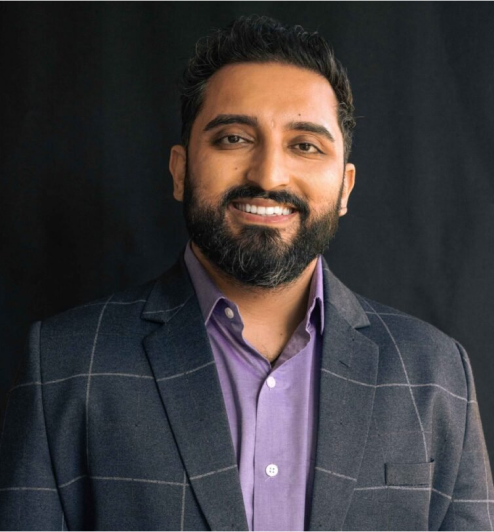

To choose a LASIK surgeon in Plano, look at four things in this order: board certification and fellowship training, how many procedures they’ve personally done, the technology in their actual surgery room, and whether they tell you no when your eyes call for it. The number that matters most isn’t the price on the billboard. It’s how many times the hands doing your surgery have done this exact thing. At Visionary Eye Surgery, I’d rather you ask me hard questions than skip them.
Does board certification really matter?
Yes, and it’s the floor, not the ceiling.
Board certification means a recognized medical board has verified the surgeon’s training and that they keep up with continuing education. For eye surgery, I’d go a step further and look for fellowship training in cornea, because LASIK happens on the front of the eye, and that’s the fellowship that lives there.
So when you’re comparing surgeons across Dallas-Fort Worth, “ophthalmologist” is the start of the question, not the end of it. Ask what they specialized in after residency.
How many procedures should my surgeon have done?
Volume is the quiet predictor everybody underrates. Higher surgical volume lines up with better outcomes and fewer complications, and that pattern holds across the research.
A reasonable surgeon should have performed somewhere in the thousands, and should hand you that number without flinching. If you ask how many LASIK procedures someone has done and the answer gets vague, that vagueness is your answer.
Ask one more, too: what’s your personal enhancement rate, and your complication rate? A surgeon who tracks their own numbers is a surgeon who’s paying attention to their own results.
What should I ask about the technology?
Ask what’s in the room, and ask when they bought it.
You want current, FDA-approved lasers, and you want to hear words like all-laser or bladeless, because modern femtosecond lasers are more precise than the older mechanical tools. I use the all-laser approach for exactly that reason.
Here’s a small question that tells you a lot in North Texas: will the surgeon you’re meeting be the one holding the laser? At some high-volume chains, the doctor you consult with isn’t always the doctor who operates. At Visionary Eye, the person who examines you is the person who does your surgery. Me.
What’s the green flag people miss?
This is the turn, and it’s counterintuitive. The best sign isn’t a surgeon who says yes fast. It’s a surgeon who tells you no.
Ask how many people they turn away as poor candidates. A practice that approves nearly everyone is optimizing for volume, not for eyes. I send people home without surgery on a regular basis, sometimes toward ASA/PRK, sometimes EVO ICL, and sometimes back to glasses because that’s genuinely the right call for them that year.
A surgeon willing to lose your business to protect your vision is a surgeon worth driving across DFW for.
What about price and guarantees?
Price belongs on the list, just not at the top of it. The lowest advertised number in Dallas-Fort Worth usually covers a basic correction and quietly leaves out the pre-op workup, enhancements, and follow-up care.
So compare what’s included, not just the headline. Our pricing is laid out plainly for that reason, and we back the work with our 20 Happy Patient Guarantee, because confidence should be in writing, not just in the consultation.
How do I make the final call?
Sit in the consultation and notice how it feels. You should not feel rushed, your questions should get real answers, and you should leave understanding your own eyes a little better than when you walked in.
Credentials get a surgeon onto your list. The way they treat your questions tells you who actually belongs there.
If you want to test all of this in person, come ask me the uncomfortable questions at a consultation in Plano. I’d genuinely rather earn your trust by answering them than by avoiding them.
Should I trust online reviews?
Use them, but read them like a surgeon would, not like a shopper.
A wall of five-star reviews tells you a practice is busy and friendly. It doesn’t tell you much about how they handle the hard cases, because the patients who got turned away or had a tough recovery don’t always write. So I’d read the middle reviews more carefully than the glowing ones, and I’d watch for how the practice responds when someone wasn’t happy.
Reviews across Dallas-Fort Worth are a starting filter, not a verdict. The real test still happens in the room, when you ask a surgeon a direct question and watch whether they give you a direct answer.
Keep Reading
All-Laser LASIK in Plano
Our 20 Happy Patient Guarantee
What Our Patients Say
More from the Visionary Eye Blog

Visionary Eye Surgery | Plano, TX