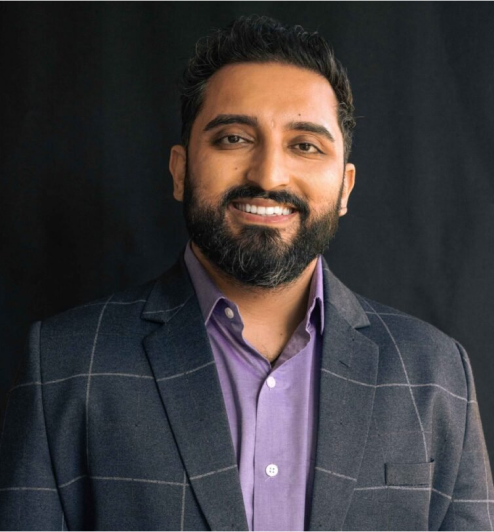

The real difference between all-laser LASIK and blade LASIK in Plano comes down to one thing: how I make the corneal flap. All-laser LASIK uses a femtosecond laser to create that flap. Blade LASIK uses a small oscillating blade called a microkeratome. At Visionary Eye Surgery, I do every flap with the laser, because it gives me control over thickness and shape that a blade can’t match. Both methods can hand you great vision in 2026. The all-laser approach just removes the one variable I least like leaving to chance.
What does the flap have to do with anything?
LASIK works by lifting a thin layer of your cornea, reshaping the tissue underneath with a laser, then laying that layer back down.
That thin layer is the flap. So it isn’t a side detail. It’s step one, and step one sets the table for everything that happens after.
With blade LASIK, a microkeratome glides across the eye and shaves the flap mechanically. It’s been around for decades, and good surgeons across Dallas-Fort Worth got excellent results with it for years. With all-laser LASIK, a femtosecond laser places thousands of microscopic bubbles at an exact depth, and the flap separates cleanly along that plane.
Here’s where most people guess wrong. They assume the scary part of a blade is the cutting. The part I actually care about isn’t sharpness. It’s predictability.
Is all-laser LASIK actually safer?
Flap complications with a blade are rare. The data puts them around one in two thousand procedures.
But they don’t show up evenly. They cluster in eyes that are steep, flat, or thin, which is exactly the kind of eye I see a fair amount of in North Texas. A blade is a mechanical pass across an unpredictable surface. A laser doesn’t care how steep your cornea is.
The laser also lets me set flap thickness almost to the micron. That matters because the tissue I leave behind is what keeps your cornea strong for the next forty years. When I can plan that number instead of estimating it, I sleep better, and so should you.
Fewer enhancements tend to follow too. When the flap is uniform, the reshaping underneath lands more consistently, so fewer patients come back for a touch-up.
Does it cost more in Dallas-Fort Worth?
Usually, yes, by a couple hundred dollars an eye. That’s roughly the gap you’ll see across DFW between bladed and bladeless pricing.
I won’t pretend that’s nothing. But think about where you’re saving. You’re not buying a bigger TV. You’re buying the most controlled version of a procedure on the one pair of eyes you get. You can see exactly what’s included on our pricing page, enhancements and follow-up and all, because the cheap advertised number that leaves those out isn’t really the price.
Who is all-laser LASIK for in Plano?
Probably someone with thinner corneas who was told elsewhere they were borderline. The micron-level control sometimes turns a maybe into a yes.
Probably someone who runs the numbers on everything and wants the method with the fewest moving parts. And probably someone who just doesn’t love the idea of a blade near their eye, which, fair enough, is most people.
If your cornea is too thin even for an all-laser flap, I’m not going to force it. That’s when I’ll point you toward ASA/PRK, which skips the flap entirely, or EVO ICL if your prescription is on the higher side.
So which one should you pick?
If you’re choosing a surgeon in 2026 and they only offer the blade, that tells you something about how recently they updated their room. It isn’t a scandal. It’s just a data point.
I went all-laser because the eye doesn’t give you a second draft. The flap is the foundation, and I’d rather build the foundation with the most precise tool I have than the fastest one.
That’s the whole difference, said plainly. One method asks the cornea to cooperate with a blade. The other tells the cornea exactly where to open. I’ll take the second one every time.
If you’re trying to figure out which procedure fits your eyes, the honest answer is that you can’t know from a blog post, and neither can I. That’s what the measurements at a consultation are for.
Will I need a touch-up either way?
Sometimes, with either method, and it’s worth knowing before you choose.
An enhancement is a small follow-up procedure to fine-tune the result, and a percentage of patients need one no matter how perfect the first surgery goes, because eyes heal on their own schedule. The reason I bring it up here is that the all-laser flap, being more uniform, tends to come with a slightly lower enhancement rate than the older blade approach.
So part of what you’re buying with all-laser in Plano isn’t just the first surgery. It’s a marginally better chance of not coming back for a second one. When you compare prices across Dallas-Fort Worth, ask whether enhancements are included, because a free touch-up changes the real cost more than the sticker does.
Keep Reading
ASA/PRK in Plano: The Flap-Free Option
EVO ICL for Higher Prescriptions in Plano
Our 20 Happy Patient Guarantee
More from the Visionary Eye Blog

Visionary Eye Surgery | Plano, TX