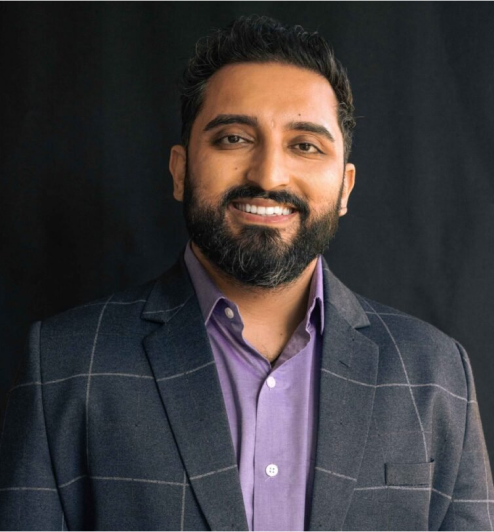

Yes, LASIK is one of the safest elective procedures performed in medicine today. The complication rate for modern all-laser LASIK sits below 1%, and serious vision-threatening complications are extraordinarily rare. I have performed thousands of these procedures at Visionary Eye Surgery in Plano, and the technology we use in 2026 is not the same technology your coworker had fifteen years ago.
But I get why you are asking. You probably typed “is LASIK safe” into ChatGPT or Google at 11pm, scrolling through conflicting answers while your contacts dried out. Every LASIK surgeon in Dallas-Fort Worth has a version of the safety talk on their website. Most of them read like a brochure. So let me skip the brochure and tell you what I actually think.
What Does “Safe” Even Mean for LASIK?
When patients in Plano ask me if LASIK is safe, what they usually mean is: “Will something go wrong with my eyes?” Fair question. The honest answer is that every surgical procedure carries some degree of risk. Crossing the street carries risk. The relevant question is how much risk, and whether the benefit justifies it.
The FDA studied LASIK outcomes extensively and found that over 95% of patients achieve 20/20 vision or better. Patient satisfaction rates consistently land above 96%. Those are numbers most medical procedures would love to claim.
Here is what changed the game for safety: the move to all-laser, bladeless LASIK. At Visionary Eye Surgery, I use femtosecond laser technology to create the corneal flap instead of a mechanical blade. That single change eliminated most of the flap-related complications that gave LASIK a bad reputation in the early 2000s.
What Are the Actual Risks of LASIK in 2026?
I am not going to pretend risks don’t exist. That would be dishonest, and you would probably see right through it anyway.
Dry eye is the most common side effect after LASIK. Most patients experience some dryness for a few weeks to a few months. For the vast majority, it resolves completely. A small percentage of patients have persistent dryness that requires ongoing treatment. I screen for dry eye risk before surgery because I would rather turn someone away than give them a problem I could have predicted.
Night vision symptoms like halos and glare can occur, especially in the first few months. With topography-guided treatments and larger treatment zones, these have become much less common than they were a decade ago.
The risk I take most seriously is ectasia, a progressive weakening of the cornea. It is extremely rare when proper screening is done. This is where surgeon selection matters more than anything else. A thorough consultation with corneal topography, pachymetry, and careful evaluation of your prescription stability is what separates a safe outcome from a risky one.
How Do I Know If LASIK Is Safe for Me Specifically?
This is the question that actually matters. LASIK is safe as a procedure. But it is not safe for every single person. The difference is the screening.
I probably turn away one out of every five or six people who come to me wanting LASIK. Not because they are bad candidates for vision correction, but because a different procedure might serve them better. Someone with a very high prescription might do better with EVO ICL. Someone with thin corneas might be a better fit for ASA/PRK. The surgeon who says yes to everyone is the surgeon I would worry about.
At my practice in Plano, the consultation is where safety really happens. I spend time with every patient going over their corneal thickness, pupil size, tear film quality, and prescription history. If something looks borderline, I tell you. I have built my reputation in North Texas on being honest about who should and should not get LASIK, and that is not going to change.
Has LASIK Safety Improved Over the Years?
Dramatically. The LASIK I perform in 2026 at Visionary Eye Surgery in Plano barely resembles what was being done in 2005. We have real-time eye tracking that follows your eye movements during the procedure at hundreds of cycles per second. We have wavefront and topography-guided treatments that customize the laser to your individual cornea. We have diagnostic technology that can detect problems before they become problems.
I sometimes joke with patients that the laser is smarter than I am. It is not entirely a joke. The technology corrects for micro-movements, adjusts for corneal curvature in real time, and delivers a level of precision that human hands alone could never achieve. My job is to make the right decision about whether to use it, and then let it do its thing.
What Should You Ask a LASIK Surgeon in Dallas-Fort Worth?
If you are evaluating surgeons, ask about their complication rate. Ask how many procedures they have performed. Ask what technology they use and when it was last updated. Ask how many people they turn away.
That last question is the one most people forget. A surgeon who never says no is a surgeon who is prioritizing volume over outcomes. In the DFW area, you have plenty of options. Choose the one who is willing to tell you something you don’t want to hear.
If you want to find out whether LASIK is safe for your specific eyes, schedule a consultation at Visionary Eye Surgery. I will give you a straight answer, even if that answer is “not yet” or “not LASIK.”
Keep Reading
All-Laser LASIK at Visionary Eye Surgery
LASIK Pricing and Financing Options
Our 20/Happy Patient Guarantee

Visionary Eye Surgery | Plano, TX