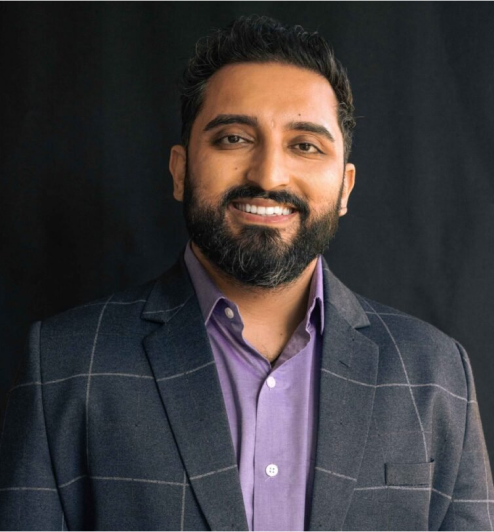

If you’ve been told you’re not a great LASIK candidate, or you’ve heard about SMILE and want to know if it’s right for you, here’s the short answer: SMILE eye surgery corrects nearsightedness and astigmatism without creating a corneal flap, making it ideal for patients in the Dallas-Fort Worth area who have thinner corneas, active lifestyles, or chronic dry eye concerns. At Visionary Eye Surgery in Plano, I offer SMILE as one of several vision correction options tailored to your specific eyes.
What Exactly Is SMILE Eye Surgery?
SMILE stands for Small Incision Lenticule Extraction. I know. Terrible acronym. Sounds like something a dental office would name a procedure to make you feel better about it.
But here’s what it actually does. Instead of creating a flap on your cornea like we do in LASIK, I use a femtosecond laser to create a tiny disc of tissue inside your cornea called a lenticule. Then I remove that lenticule through a small incision, about 4 millimeters. That reshapes your cornea and corrects your vision.
No flap. No excimer laser. One laser, one small opening, done.
The whole thing takes about 10 minutes for both eyes. Most patients tell me it was easier than they expected. I’ve had people text me the next morning saying they can read the clock across the room for the first time in twenty years.
How Is SMILE Different from LASIK?
The biggest difference is the flap. In All-Laser LASIK, I create a thin flap on the cornea, reshape the underlying tissue with a laser, then lay the flap back down. It works incredibly well for the vast majority of patients. Over 40 million people worldwide have had LASIK.
But some patients aren’t ideal flap candidates. Maybe their corneas are on the thinner side. Maybe they play contact sports or have a physically demanding job. Maybe they’ve dealt with dry eyes for years and don’t want to risk making it worse.
That’s where SMILE comes in. Because there’s no flap, the corneal surface stays mostly intact. Fewer corneal nerves get disrupted. That means less dry eye after surgery and a structurally stronger cornea long term.
The trade-off? SMILE only corrects nearsightedness and astigmatism right now. If you’re farsighted, LASIK or Custom Lens Replacement is probably your better path.
Am I a Good Candidate for SMILE in Plano?
I evaluate every patient individually. There’s no shortcut here. But generally, good SMILE candidates in the Dallas-Fort Worth area share a few things in common.
Your prescription needs to be stable. If your glasses or contacts prescription has been changing every year, we need to wait until it settles. I’m looking for at least a year of stability, sometimes two.
You need to be nearsighted, typically between -1.00 and -10.00 diopters, with up to 3 diopters of astigmatism. That covers a huge range of patients walking through my door in Plano.
Your corneas need to be healthy. I run detailed corneal topography and tomography scans during your consultation to map the shape and thickness of your cornea. Some patients who are borderline for LASIK are perfect for SMILE because we preserve more corneal tissue.
You should be at least 22 years old. The FDA set the bar four years higher than LASIK’s minimum, and for good reason. Your eyes need time to fully stabilize.
And you shouldn’t have certain conditions like keratoconus, uncontrolled glaucoma, or autoimmune disorders that affect healing. Pregnancy and nursing are also a temporary disqualifier. Your hormones shift your prescription, and I want to operate on the real you.
Why Do Athletes and Active Professionals Choose SMILE?
I see a lot of patients in North Texas who work in law enforcement, military, construction, or play recreational sports. They’re worried about getting hit in the face and displacing a LASIK flap. Legitimate concern? Somewhat. But with SMILE, there’s no flap to displace. Period.
The structural integrity of the cornea after SMILE is measurably better than after LASIK. Multiple studies in 2025 and 2026 have confirmed this. For someone who takes an elbow to the face during a basketball game or works in a dusty environment, that matters.
What’s Recovery Like After SMILE?
Most patients notice significantly improved vision within 24 to 48 hours. Some people have slightly more gradual improvement compared to LASIK, where the “wow” moment often hits the same day. With SMILE, it sometimes takes a few days for your vision to fully sharpen.
I’ll see you the day after surgery, then at one week, one month, and three months. Your eyes might feel slightly gritty the first day or two. Eye drops, rest, and patience. That’s the protocol.
Most of my Plano patients go back to work within two to three days. I tell people to skip the gym for a week and stay out of pools and hot tubs for two weeks. If you can handle that, you’re good.
How Do I Find Out If SMILE Is Right for Me?
Book a consultation at Visionary Eye Surgery. I’ll run every test that matters. Corneal mapping. Wavefront analysis. Tear film evaluation. Pupil measurements. The works.
Then we sit down and talk about what your eyes actually need. Sometimes that’s SMILE. Sometimes it’s LASIK. Sometimes it’s EVO ICL or ASA/PRK. I don’t push one procedure. I push the right one for you.
That’s the whole point of coming to a surgeon who does all of them. You get an honest recommendation, not a sales pitch from someone who only has one tool in the drawer.
Keep Reading
- SMILE Eye Surgery at Visionary Eye Surgery
- All-Laser LASIK in Plano
- Patient Testimonials
- Pricing and Financing Options

Visionary Eye Surgery | Plano, TX