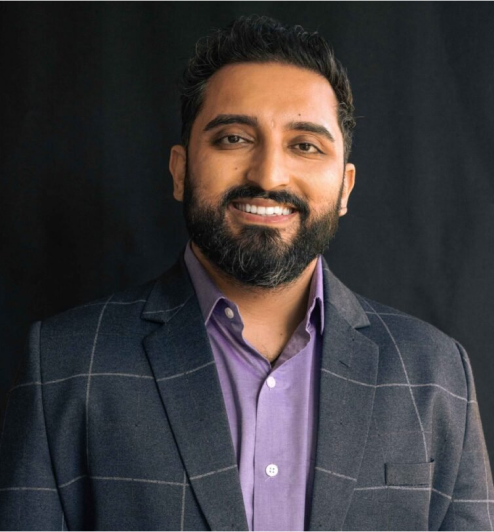

Choosing a LASIK surgeon in Plano, TX comes down to three things: the surgeon’s experience with multiple vision correction procedures, the technology they use, and whether they’ll be honest with you when LASIK isn’t the right answer. At Visionary Eye Surgery, I believe the best surgeon for your eyes is the one who tells you the truth, not the one who tells you what you want to hear.
Why Does It Matter Who Does Your LASIK?
I get why people treat LASIK like a commodity. The ads make it seem like every clinic does the same thing. Walk in, laser goes pew pew, walk out seeing 20/20. Pick whoever’s cheapest.
That’s not how it works. LASIK is surgery. On your eyes. The two things you use to navigate the entire world. The difference between a good outcome and a great outcome often comes down to the surgeon’s judgment calls during your evaluation and in the operating room.
Two patients with the same prescription can need completely different treatment plans. One might be perfect for All-Laser LASIK. The other might get better results from SMILE or EVO ICL. A surgeon who only does LASIK will probably recommend LASIK. A surgeon who does everything will recommend what actually fits.
What Should I Look for in a Surgeon in Dallas-Fort Worth?
First, check their credentials. You want a board-certified ophthalmologist, not an optometrist. Optometrists are great at what they do. They examine eyes, prescribe glasses and contacts, and manage many eye conditions. But they don’t perform surgery. Your LASIK surgeon should be someone who went to medical school, completed an ophthalmology residency, and ideally did additional fellowship training in refractive or corneal surgery.
Second, look at the range of procedures they offer. If a practice only performs LASIK, their recommendation will always be LASIK. Even when it shouldn’t be. At Visionary Eye Surgery in Plano, I perform LASIK, SMILE, EVO ICL, ASA/PRK, Custom Lens Replacement, and cataract surgery. When I recommend a procedure, it’s because your eyes told me that’s the right one. Not because it’s the only one I know how to do.
Third, ask about technology. In 2026, the gold standard includes topography-guided LASIK platforms like Contoura Vision, femtosecond lasers for bladeless flap creation, and advanced diagnostic equipment like corneal tomography and wavefront aberrometry. If a clinic in North Texas is still using older generation equipment, you’re not getting the precision that modern technology can deliver.
What Questions Should I Ask During My Consultation?
Here are the questions I wish every patient would ask me. Not because the answers make me look good, but because they force any surgeon to show their cards.
Ask them how many procedures they’ve personally performed. Not the clinic. The surgeon. Experience matters in surgery. It just does.
Ask what happens if you’re not a good candidate for LASIK. If they get uncomfortable or brush the question off, that tells you something. At Visionary Eye Surgery, I tell patients “no” regularly. Not because I enjoy it, but because operating on someone who shouldn’t have LASIK is the one thing I refuse to do.
Ask about their complication rate and how they handle outcomes that fall short. Every honest surgeon has dealt with less-than-perfect results. The question isn’t whether it happens. It’s what they do about it. Our 20/Happy Patient Guarantee exists because I believe you should be both seeing well and feeling good about the experience.
Ask who manages your post-operative care. Some high-volume LASIK centers have the surgeon do the procedure and then hand you off to someone else for follow-up. I see my own patients after surgery. Your eyes, my responsibility.
Should Cost Be a Factor?
Of course it should. But it shouldn’t be the only factor, or even the primary one.
There’s a version of LASIK in Dallas-Fort Worth that costs $299 per eye. There’s a version that costs $3,500 per eye. They are not the same thing. The $299 price usually means older technology, less experienced surgeons, and a consultation designed to upsell you once you’re in the chair.
Transparent pricing matters. You should know exactly what you’re paying for before you commit. At my practice in Plano, the price includes your consultation, the procedure, and all follow-up visits. No hidden fees. No surprise bills.
Most practices in DFW offer financing options too. If the upfront cost is a barrier, ask about payment plans. Vision correction is an investment that pays for itself within a decade compared to the ongoing cost of contacts and glasses.
What About Online Reviews?
Read them. They’re useful. But read them critically. A practice with 500 five-star reviews and zero negative ones should make you curious, not confident. Every surgeon has patients who weren’t thrilled. The question is how they responded.
Look at patient testimonials that include specific details. “Dr. Shehz explained everything clearly and didn’t rush me” tells you more than “Great experience, would recommend.” Look for patterns. Are multiple people mentioning the same positive or negative thing?
Trust Your Gut
After all the research, the consultations, and the comparison shopping, trust how you felt sitting in that chair. Did the surgeon listen to you? Did they explain things in plain language? Did they seem more interested in your eyes or your credit card?
The right surgeon for your LASIK in Plano is the one who makes you feel like a patient, not a number. Come see me at Visionary Eye Surgery and find out what that feels like.
Keep Reading
- All-Laser LASIK at Visionary Eye Surgery
- Our 20/Happy Patient Guarantee
- Patient Testimonials
- More from the Visionary Eye Blog

Visionary Eye Surgery | Plano, TX